Music and Texts of GARY BACHLUND
Vocal Music | Piano | Organ | Chamber Music | Orchestral | Articles and Commentary | Poems and Stories | Miscellany | FAQs
Five Poems of Countée Cullen - (2007)
for medium voice and piano
( Please note: It is believed these texts remain under copyright and are therefore not reproduced herein.)
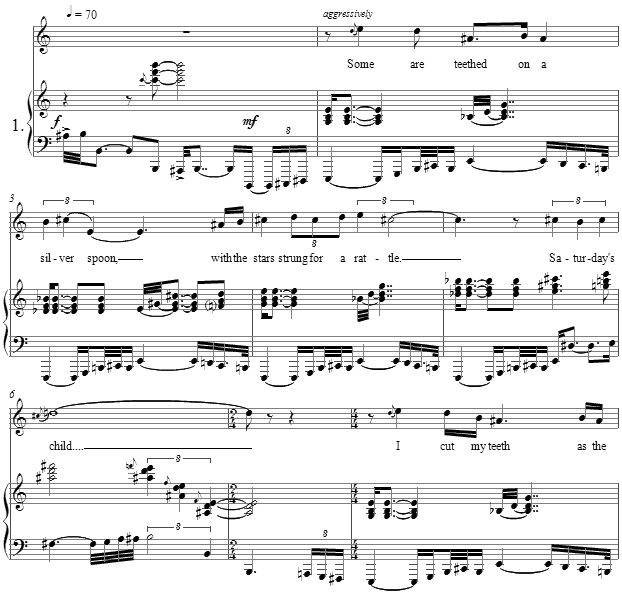
i. Saturday's Child [ 5 pages, circa 3' 00" ]
Some are teethed on a silver spoon,
With the stars strung for a rattle;
I cut my teeth as the black racoon--
.....
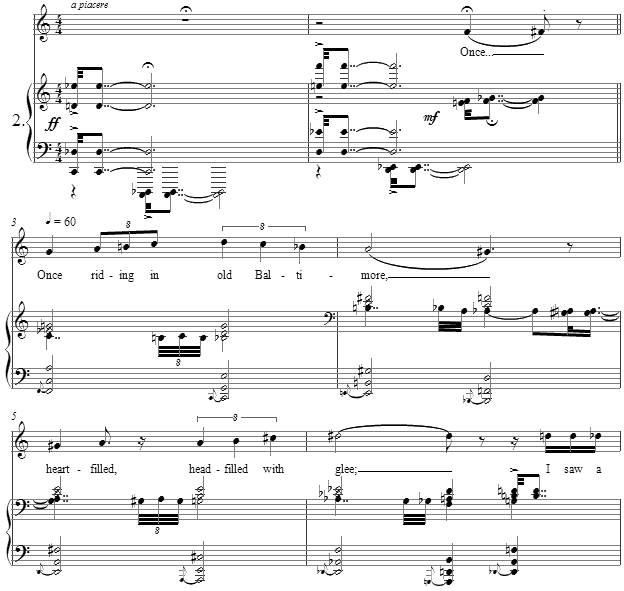
ii. Incident [ 3 pages, circa 2' 10" ]
Once riding in old Baltimore,
Heart-filled, head-filled with glee;
I saw a Baltimorean
Keep looking straight at me.
.....
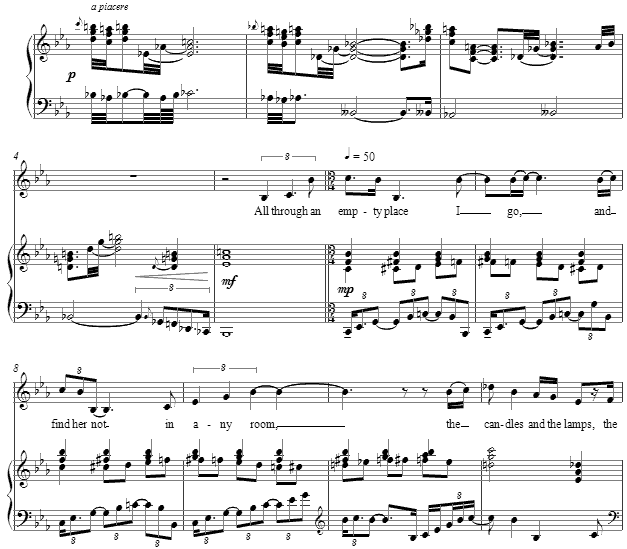
iii. The Loss of Love [ 7 pages, circa 7' 10" ]
All through an empty place I go,
And find her not in any room;
The candles and the lamps I light
Go down before a wind of gloom.
.....
iv. For a Poet [ 3 pages, circa 2' 05" ]
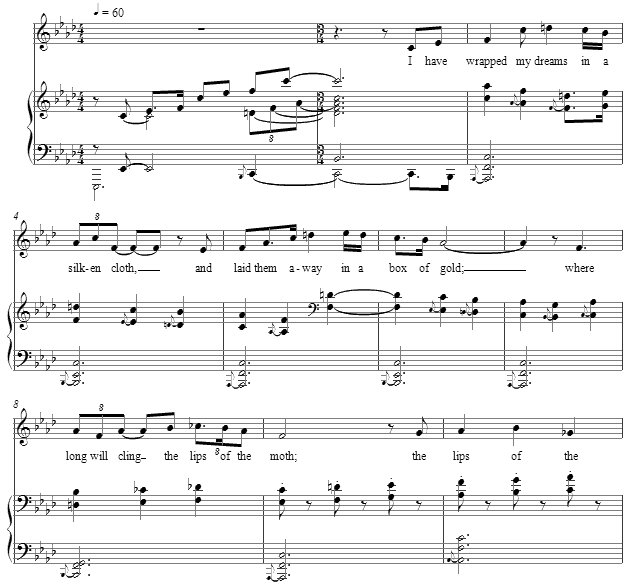
I have wrapped my dreams in a silken cloth,
And laid them away in a box of gold;
.....
v. The Wise [ 3 pages, circa 2' 30" ]
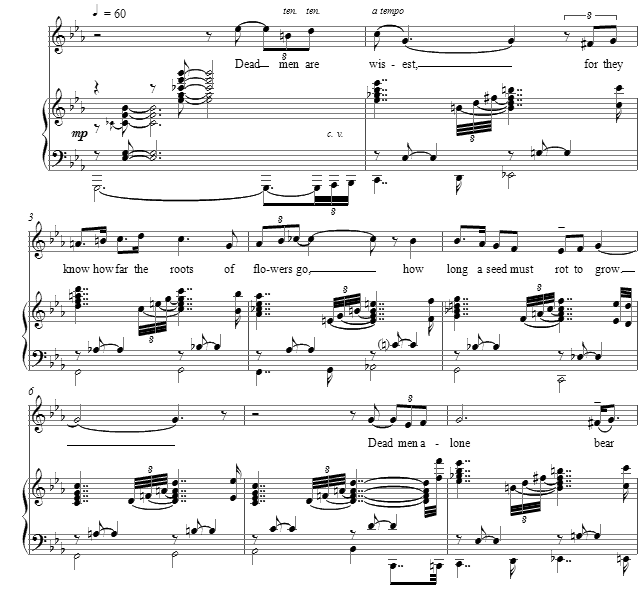
Dead men are wisest, for they know
How far the roots of flowers go,
How long a seed must rot to grow.
.....
Total duration - 21 pages, circa 16' 25" ]
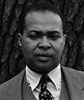
Countée Cullen
It is uncertain where Countee Porter (later known as Countee Cullen) was born, but it was probably in Louisville, Kentucky on May 30, 1903. On his application to New York University, he noted his birthplace as Louisville, but later in life, he claimed that he was born in New York City. His mother was Elizabeth Thomas and his father was unknown. Cullen had an unstable home life. His mother left the rearing of Cullen to his grandmother Amanda Porter, with whom he lived with her until her death in 1917. After she died, he lived with Reverend Frederick Asbury Cullen and his wife in New York City. Rev. Cullen was the minister of the Salem Methodist Episcopal Church. Cullen was not officially adopted, but he considered the reverend and his wife his parents. The Cullens had such a strong influence in his life that by the time that he was eighteen, he had changed his name from Porter to Cullen.
He attended De Witt Clinton High School in New York and began writing poetry at the age of fourteen. In 1922, Cullen entered New York University. His poems were published in The Crisis, under the leadership of W. E. B. Du Bois, and Opportunity, a magazine of the National Urban League. He was soon after published in Harper's, the Century Magazine, and Poetry. He won the Witter Bynner Undergraduate Poetry Prize and other awards for his poem, "Ballad of the Brown Girl," and graduated from New York University in 1923. That same year, Harper published his first volume of verse, Color, and he was admitted to Harvard University where he completed a master's degree. Most notable to critics, were the racial themes of Cullen's poetry. In 1926, Cullen received his M.A. from Harvard University. From 1926 to 1928, he served as assistant editor for Opportunity. In 1928, he received a Guggenheim Fellowship to study in Paris, France. Before leaving, he married Yolanda Du Bois, the daughter of W. E. B. Du Bois. The marriage was brief, and they divorced in 1930.
Cullen's second volume of poetry, Copper Sun (1927), met with controversy in the black community because he did not give the subject of race the same attention he had given it in Color. Copper Sun dealt less with race, and focused more on life and love. He was raised and educated in a primarily white community, and he differed from other poets of the Harlem Renaissance like Langston Hughes in that he lacked the background to comment from personal experience on the lives of other blacks or use popular black themes in his writing.
The Black Christ and Other Poems, the product of his Guggenheim Fellowship, was published in 1929. Unlike his previous work, this book of poems received less than stellar reviews. From thereafter, Cullen's career as a poet and writer waned. He continued to publish other works such as, One Way to Heaven (1932), The Medea and Some Poems (1935), The Lost Zoo (1940), and several other books and poems. However, his later work failed to produce the same praise as his previous books of poetry.
From 1934 until his death, Cullen taught English and French at Frederick Douglass Junior High School. In 1940, he married Ida Mae Roberson. Despite taking a teaching position, Cullen continued writing. In collaboration with Arna Bontemps, he wrote the script for the play, St. Louis Woman, which was based on Bontemps' novel, God Sends Sunday. Cullen died January 9, 1946, a few months before the play opening in March.
These song settings were composed on James Island, Charleston, and at Folly Beach, a sea island nearby, while staying in lodgings on Arctic Avenue, five blocks from that now washed-away extension of the road where George and Ira Gershwin and DuBose and Dorothy Heyward worked on their American classic, Porgy and Bess. As with the reactions to this now well-accepted opera, I expect some complaint for settings Cullen's and Campbell's poems in which the variants of negro -- nigger, and niggah -- are an important part of the text. For such complaints and those who would make them, I care not; the importance of honoring these fine black American poets and their work far exceeds the forced, enforcing "sensitivities" of those who would censor their work or mine.
The first of these fine poems is a statement of harsh reality, as the child learns to be an adult who has be denigrated as "one more mouth to feed." The setting is therefore dark, with the shifting underlying harmonies not wholly related to any one tonality, as the chord structures rise by subsequent minor thirds up to the octave.
The characteristic "Scotch snap" rhythm is herein interpreted to mime the harsh, accusatory word stress, "nigger." The dense, jazz oriented chords shift under the melody line without common practice sensibilities.
The bass line which accompanies a chromatic, moving alto line begins its statement with the six of the scale, as if to emphasize the instability and dis-ease of this soul, moving through a home where once the loved one live and now no longer moves. Blue notes in both the vocal line and accompaniment flavor and accentuate this "loss of love," something about which one can do nothing except experience it.
The change of pace and color is appropriate as the poet speaks of having "wrapped" his dreams -- essentially in the published editions by which we come to know their work. Cullen's work was praised in his era, and yet is fostered various kinds of criticism from those who have much to say in prose, and so little so add in a poetic voice.
The final statement of this song collection offers the view that the dead "are wisest." Perhaps, from the poet's perspective and as one may find in parallel voices speaking out of many other cultures, the "dead" leave off the foolishness by which we of the living make our errors, our sins and our lies part of the fabric of foolish lives.
NOTE: I have tried through several avenues to receive a reply from the estate representatives of Countee Cullen for these texts to be published, either commercially or to be made freely available as PDF downloads, as are so many other scores within this site. I will again get around to again seeking permission, but chasing after permissions when letters are not answered becomes uninteresting when balanced against composing and working with so much fine poetry which is assuredly within the public domain or available for publishing through arrangement with farsighted estates. For the sake of this particular poet, I wish it were otherwise.)